October 06, 2026
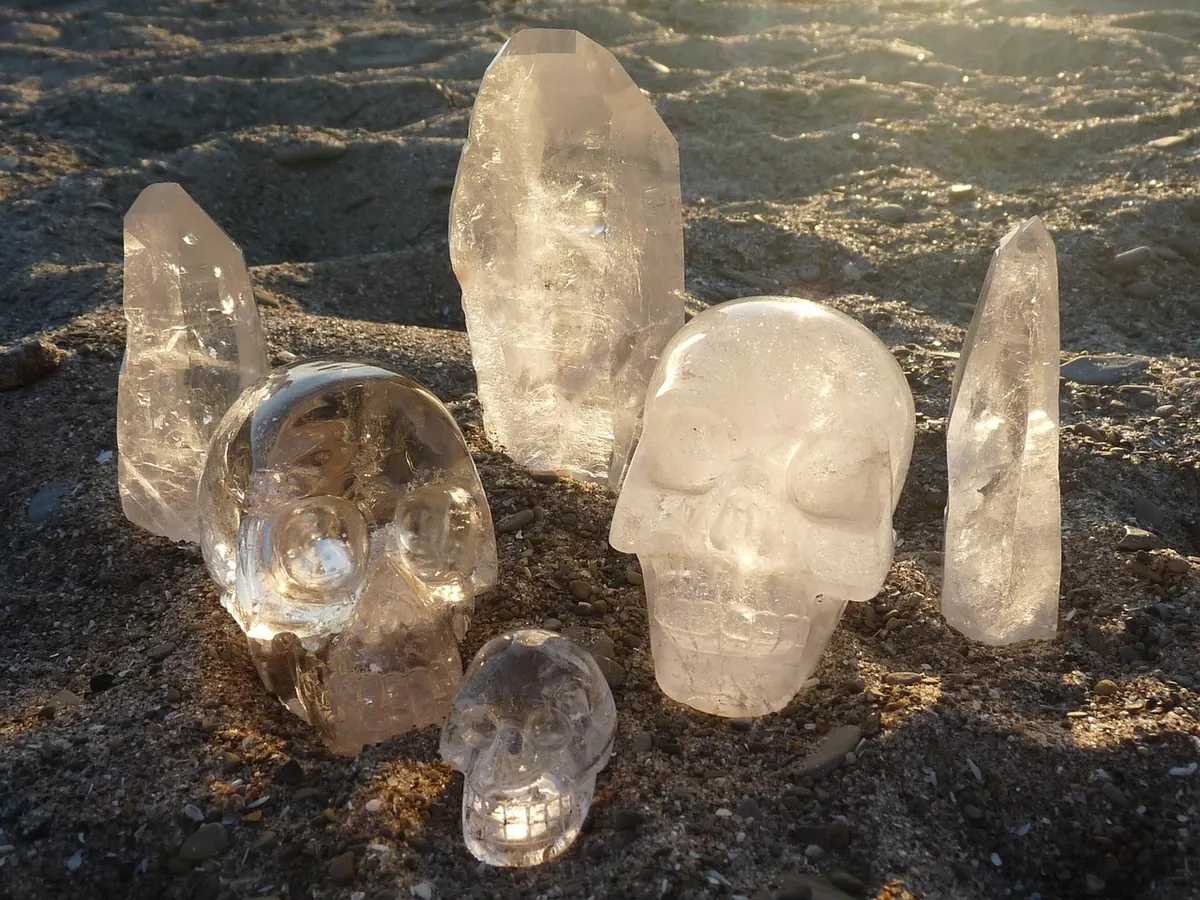
A quartz point that has sat on the same shelf for a year can start to feel like furniture. Then you pick it up, turn it in the light, and something has gone flat. Whether you call that build-up stale energy or simply dust, fingerprints and a tired room, the fix is a short, careful routine. The catch is that quartz is tougher than most people expect and more fragile than they hope. The same stone that scratches glass will crack if you move it from a cold windowsill into hot water. Here is how to cleanse and recharge quartz pieces properly, and which popular methods are worth skipping.
Start by Knowing What You Actually Have
Pure quartz ranks seven on the Mohs scale, which is hard. But most pieces on a collector's shelf are not pure quartz. They carry iron staining, chlorite, fuchsite, hematite, fine hairlike rutile, or a thin metallic coating applied in a lab. They may be set in silver with a glued bail, or glued to a small acrylic stand. Each of those details changes what the stone will tolerate.
Before you cleanse anything, look closely. Does the surface have a film or coating that could chip or cloud? Are there visible fractures, or a cloudy zone running through the point? Is there matrix attached at the base — a chunk of host rock that may soften or crumble in water? A ten-second inspection saves a lot of regret. If a piece is an heirloom, a large statement specimen, or something you suspect is worth real money, ask a jeweller or gemologist before you experiment. They will tell you more in five minutes than a shelf of folklore will.
Water: The Simplest Method, and the One That Ruins the Most Pieces
Rinsing a quartz point under cool running water is the most instinctive cleanse there is, and for clean, unfractured, uncoated quartz it is perfectly fine. Keep the water cool or lukewarm, never hot. A stone that has been sitting in a cold room or on a sunny sill should come to room temperature first. Sudden temperature change is what cracks quartz, not water itself.
Skip the water entirely for these:
- Any quartz with a bonded coating — aqua aura, titanium aura, angel aura and similar treated pieces. The film is thin and scratches, and abrasion turns it patchy.
- Specimens with iron staining or pyrite inclusions. Water encourages rust blooms that discolour the white quartz around them.
- Pieces sitting on soft matrix — some host rock dissolves or turns to mud.
- Jewellery with glued settings, or any piece where the metal is already tarnished and you cannot dry it fully.
- Anything with a visible crack running through it. Water seeps in, and a later knock finishes the job.
If you do rinse, use a soft brush rather than your fingernail for the grit in the crevices, and dry the piece promptly with a lint-free cloth. Then let it air dry somewhere warm and dry for a few hours, especially if it lives in a bathroom. Lint trapped in a rough fracture looks like grey fuzz forever.
Sunlight and Moonlight: Beautiful, With One Warning
Moonlight is the safest charging method in common use. Leaving a point on a windowsill overnight does nothing harsh to the stone, and the ritual itself is a pleasant one. Sunlight is different. Amethyst, rose quartz and some smoky pieces are the usual casualties of long direct exposure, losing saturation over months rather than minutes. A few hours on a bright windowsill is not the problem; a summer of full afternoon sun is.
If a piece feels like it needs light, put it out in the morning and bring it in before the heat builds. Never leave quartz in a parked car or on a metal balcony rail. Heat stress and hard surfaces are a worse combination than any energetic imbalance.
What about salt, rice and burial in soil?
Dry salt is abrasive and leaves grit in every crack. Salt water is worse: it creeps into fractures, crystallises as it dries, and stresses the stone from the inside. Brown rice is gentler but dusty, and the dust settles into rough surfaces. Burying a piece in garden soil invites moisture and staining. None of these will destroy a sturdy tumbled stone, but they will quietly dull a good specimen. There are easier methods.
Sound, Smoke and Other Gentle Standbys
Sound is the method with the fewest side effects. A tuning fork struck near the point, a small bell, or a singing bowl held close all work without touching the stone. Hold the piece in your hand or set it on a soft cloth, and give it a minute or two. This is also the best option for a piece you cannot get wet or dusty.
Smoke is popular and effective as a ritual, though it leaves residue. Hold the quartz in the smoke rather than over the flame, keep the burning bundle well away from the stone, and never let an ember fall on it. Palo santo, cedar and incense all work. If you use loose herbs, burn them in a fireproof dish on a stable surface and open a window — the smoke should drift past the stone, not fill the room. A quick wipe afterwards with a dry cloth keeps the surface clean.
For jewellery you wear daily, the simplest reliable cleanse is a soft dry cloth and a few minutes of attention. Wipe it, hold it, put it away deliberately. That is not a lesser ritual; it is the one most likely to actually happen.
Charging: Clusters, Plates and Plain Rest
Charging is the part people overcomplicate. A quartz cluster or geode makes a good resting place for smaller points, and a selenite plate does the same job. Place the piece on top, leave it overnight, and put it back where it lives. There is no need for pyramids, elaborate grids or a specific hour of the night.
Rest works just as well. Many collectors simply give a piece a break — out of the room, off the windowsill, wrapped in a soft cloth in a drawer for a few days. Something that has been handled hard needs less ceremony and more quiet. Sunlight, moonlight, sound, smoke, a cluster, a cloth-lined box: pick two that suit your habits and stop there. A routine you repeat is worth more than a perfect one you abandon.
How Often to Recharge Different Pieces
Frequency depends on handling, not on the calendar. Use this as a starting point:
- Jewellery worn daily: a quick wipe every week, a fuller cleanse monthly. Skin oils and perfume residue matter more than anything energetic.
- Pieces you carry or handle often: every two to four weeks, or whenever the surface feels tacky or dull.
- Display points and clusters: a dust and a moonlight session once a season is plenty. Larger specimens are usually left alone.
- Working pieces used in practice: after each intense session, and a longer rest every month or so.
- New arrivals: cleanse once when they come in, then let them settle. Secondhand pieces often need nothing more than a careful dry brush.
- After travel, moving house or a difficult week: whenever it feels warranted. Intuition is a decent trigger here, as long as it does not turn into constant handling.
A Simple Monthly Routine
Once a month, set aside ten minutes. Clear a space at the sink, use cool water and a soft brush on the pieces that can take it, and dry them properly. Wipe the rest with a dry cloth. Ring a bell or strike a tuning fork near each one for a few seconds. Then leave the lot on a windowsill overnight, out of direct afternoon sun, and put everything back in the morning.
That is the whole practice: water where it is safe, sound where it is not, light in moderation, and a real rest afterwards. Quartz holds up for decades on that kind of care — which is rather the point, since most of us intend to keep these pieces for a very long time.
Photo: 1046654 / Pixabay